

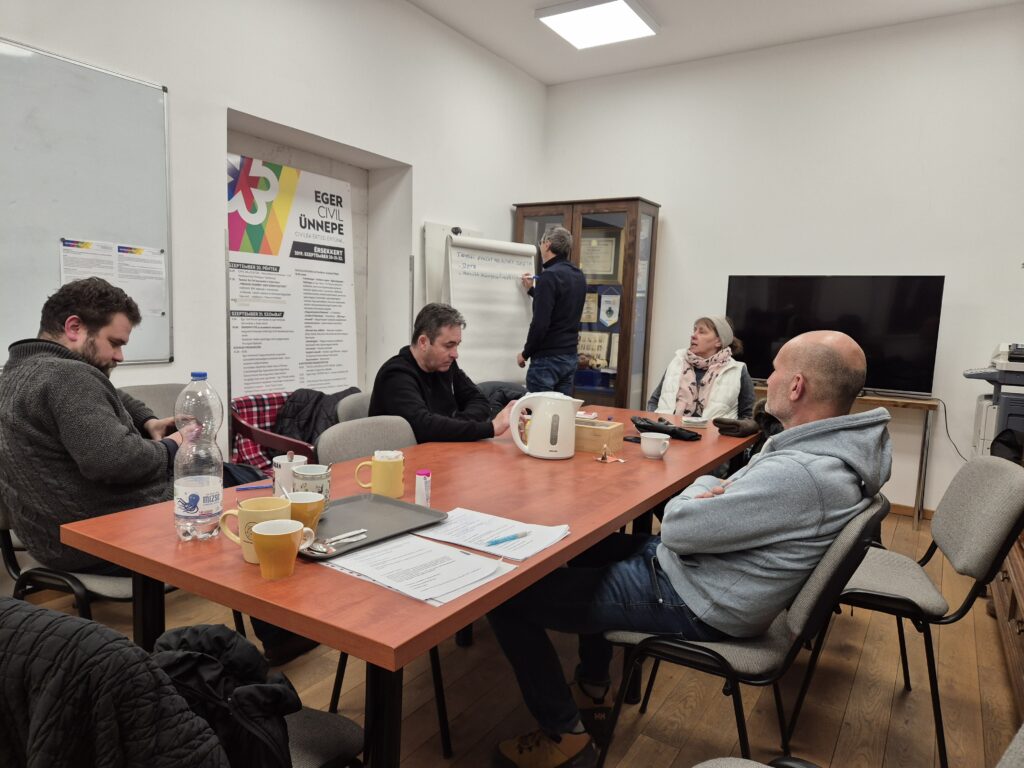
Between January and December 2025, Alternative Communities Association implemented an incubation process aimed at strengthening informal civic groups and transforming grassroots motivation into structured, sustainable action.
The programme supported 8 informal groups selected through an open call, based on diversity, motivation, and development potential. These groups worked in areas such as women’s empowerment, youth mental health, cultural life, urban heritage protection, cycling culture, minority student support, and community-led urban regeneration.
From Recruitment to Diagnosis
The recruitment process attracted nine informal groups from across Hungary. Eight were selected by an expert jury based on clear formal and motivational criteria, including group diversity, minimum size, and commitment to development.
Each group then participated in a diagnostic phase, using semi-structured interviews, observation, and facilitated discussions. This phase helped identify core needs such as:
- lack of clear mission and vision
- limited visibility and communication
- burnout and uneven task distribution
- need for funding strategies and partnerships
Rather than applying a “one-size-fits-all” model, the incubation process was fully tailored to each group’s stage of development.
The Incubation Journey
The incubation process combined:
- individual mentoring
- strategic, communication, fundraising, and stakeholder-mapping workshops
- online and in-person consultations
A total of 15 workshops and 10 consultations were delivered, focusing on practical skills such as planning, teamwork, communication, financial awareness, and organisational sustainability.
Participation levels varied, reflecting the reality of informal groups operating on a voluntary basis. Despite scheduling challenges, engagement remained high, and cooperation was consistently constructive and trust-based.
Local Initiatives and Community Impact
As part of the programme, informal groups implemented concrete local initiatives, including:
- women’s and men’s community circles
- youth mental health and self-awareness workshops
- community discussions on urban heritage
- renovation of public park benches through volunteer action
- cycling events strengthening local and national courier communities
- intergenerational student gatherings
These initiatives reached hundreds of community members, strengthened local networks, and reinforced the groups’ confidence in their ability to act.
Even in cases where planned activities could not be implemented, learning outcomes remained strong—particularly around communication, stakeholder engagement, and realistic capacity planning.
Key Results and Learnings
The incubation process led to tangible qualitative and quantitative results:
- clearer missions, visions, and strategies
- stronger internal cooperation and leadership awareness
- increased visibility and community engagement
- formalisation steps for several groups
- renewed motivation and long-term planning
One of the most important lessons was that mentoring leaders is as crucial as developing group skills. Flexibility, reduced administrative burden, and personal closure moments were also identified as key areas for future improvement.
Looking Ahead
The Civic Incubator confirmed that informal groups are vital actors of local democracy and social cohesion. With the right support, they can grow stronger, more resilient, and more impactful—without losing their grassroots character.
Building on these lessons, future incubation programmes can further strengthen civil society by combining professional support with trust, flexibility, and genuine partnership.