

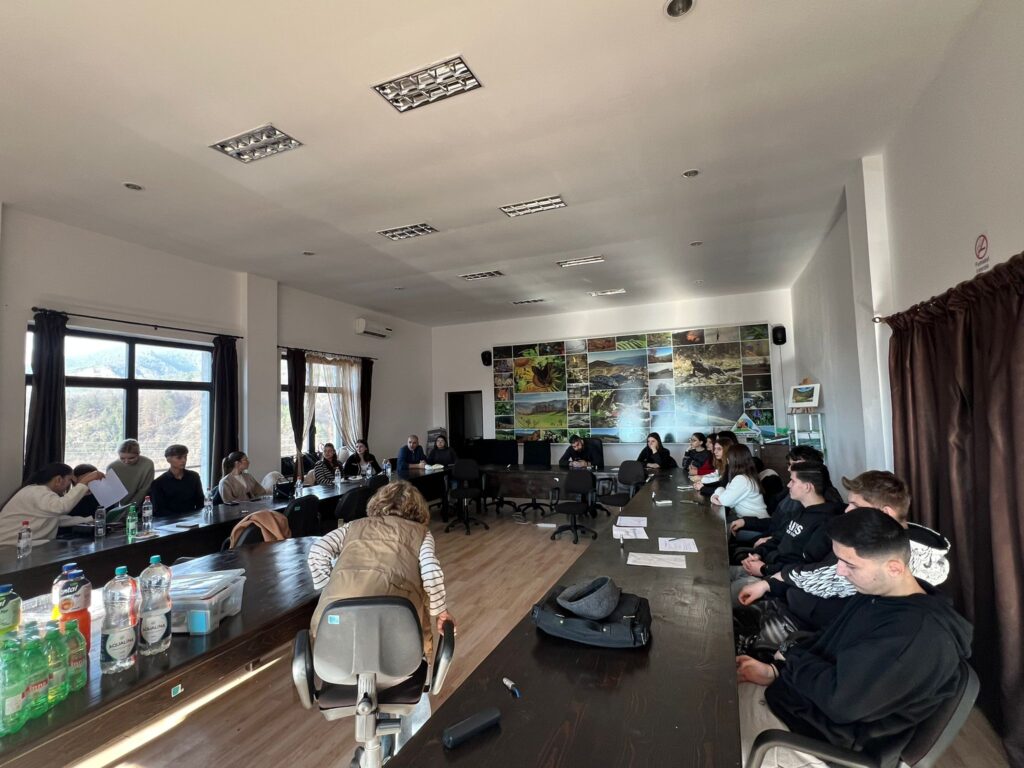
Between 24 September and 12 December 2025, PACT Foundation implemented an incubation process in Romania to strengthen informal civic groups working in rural areas and small urban communities—especially those with strong community potential but limited access to structured support.
Six informal groups were recruited and all six entered the incubation process. Together, they represented a wide range of community priorities: parenting support and psychoeducation, rural learning opportunities for children, youth civic participation, women-led community organising, and safer support pathways for women facing abuse.
Recruitment: Reaching groups that are often hard to find
The recruitment campaign relied on multiple channels—PACT Foundation’s social media (with Facebook performing best), NGO announcement platforms, and direct outreach through trusted community contacts and practitioners.
A key lesson from recruitment was clear: online visibility alone is not always enough. Some of the strongest informal initiatives are not easily reached through public calls, and direct outreach through local networks remains essential—especially in contexts where many previously supported groups have already formalised and become ineligible for informal-group calls.
Diagnosis: different starting points, shared needs
Across groups, the diagnosis phase confirmed a common pattern: strong motivation and local credibility, paired with development needs such as:
- clearer roles and internal coordination
- stronger planning routines and documentation
- improved communication and outreach
- access to partnerships and supportive ecosystems
- sustainable pathways for growth (including, for some groups, formalisation)
The incubation approach was intentionally tailored to each group’s maturity and context:
Parent support & community hubs
De la si(n)gur la SIGUR needed evidence-building and service design tools to support their vision of community hubs for parents—alongside stronger governance and role clarity to prepare for growth.
Rural education and community reactivation
Încrezătorii din Ologeni focused on reactivating the group nucleus, mapping community needs, and using participatory methods to set priorities and build a realistic action plan with local “resource people”.
Safer pathways for women
Cu cine să nu ieși la date faced a transition challenge: moving from a large online peer-support community into a structured initiative that can collaborate safely and sustainably with partners in legal, psychosocial, and civic support ecosystems.
Youth groups becoming teams
Exploratorii urbani and Tinerii din DEP needed foundational organisational routines: planning, role allocation, facilitation, and practical delivery—turning enthusiasm into structured civic action.
Women-led community confidence and autonomy
Femeile schimbă destine, a Roma women’s group, showed strong cohesion and identity, while needing deeper support to strengthen autonomy, shared long-term vision, and civic participation skills—especially in contexts shaped by discrimination and limited trust in institutions.
What the incubation process included
Across the six groups, the incubation process combined mentoring, practical tools, and learning-by-doing. Groups worked on:
- communication and role division
- collaborative planning and basic facilitation
- stakeholder and partnership thinking
- building confidence through real implementation
Participation remained strong overall, and engagement increased once groups moved from planning into micro-project delivery—because practice made the learning real.
The programme also navigated real-life constraints: busy seasonal timing, varying digital skills, limited availability, and sensitive topics requiring ethical care and trust-based support.
Local initiatives: action rooted in real needs
Each group implemented a locally relevant initiative aligned with its purpose:
- Parent reflection and needs-focused discussions that generated practical insights for future services, including moments designed for deeper family reflection.
- A community consultation and reactivation event in a rural school, where participants identified needs, voted on priorities, and co-created a short-term agenda for follow-up action.
- A strategic partner meeting to clarify identity, collaboration pathways, and safe next steps for an emerging initiative supporting women impacted by abusive relationships—strengthening coordination rather than duplication.
- A youth-led public space activation, combining clean-up and a reading-focused community moment that created a “corner” for young people and set the foundation for repeat editions.
- A community celebration for Roma children, used as a powerful teamwork practice moment—helping the women strengthen shared responsibility and move from external dependency toward self-organisation.
- A structured public dialogue (“public café”) on youth futures, bringing together young people, local authorities, and entrepreneurs to surface priorities and build legitimacy for future collaboration.
Together, these initiatives demonstrated a key principle: informal groups develop fastest when they can apply tools immediately through a real activity, not only through workshops.
What changed for the groups
In evaluation conversations, groups consistently described:
- greater confidence to plan and deliver activities
- stronger internal cohesion and accountability
- clearer priorities and practical next steps
- increased willingness to collaborate beyond the group
For some groups, the process clarified pathways toward formalisation and sustainability; for others, it strengthened the foundations of autonomous community action and local leadership.
Participants also highlighted the value of safe, welcoming spaces—where people feel heard, and where dialogue can lead to concrete change.
Lessons learned for future cycles
Across the programme, several themes emerged:
- More time between mentoring and implementation supports reflection, outreach, and stronger beneficiary engagement.
- Seasonal timing matters: late autumn and December can limit participation and make outdoor activities difficult.
- Tailored mentoring is essential: groups advance at different speeds and need different tools.
- Trust-building is the foundation: emotional safety and supportive facilitation increase engagement and ownership.
- Sensitive topics require extra care: safeguarding, ethics, and partnership-building are not “add-ons”—they are core conditions for sustainable impact.
Looking ahead
PACT Foundation’s incubation cycle showed that informal groups—when supported with flexible, practical mentoring—can strengthen their identity, build confidence, and deliver meaningful local action even within a short timeframe.
Most importantly, the process helped grassroots initiatives take steps toward longer-term civic engagement: clearer direction, stronger teamwork, better partnerships, and a stronger sense of agency to continue beyond the project.