

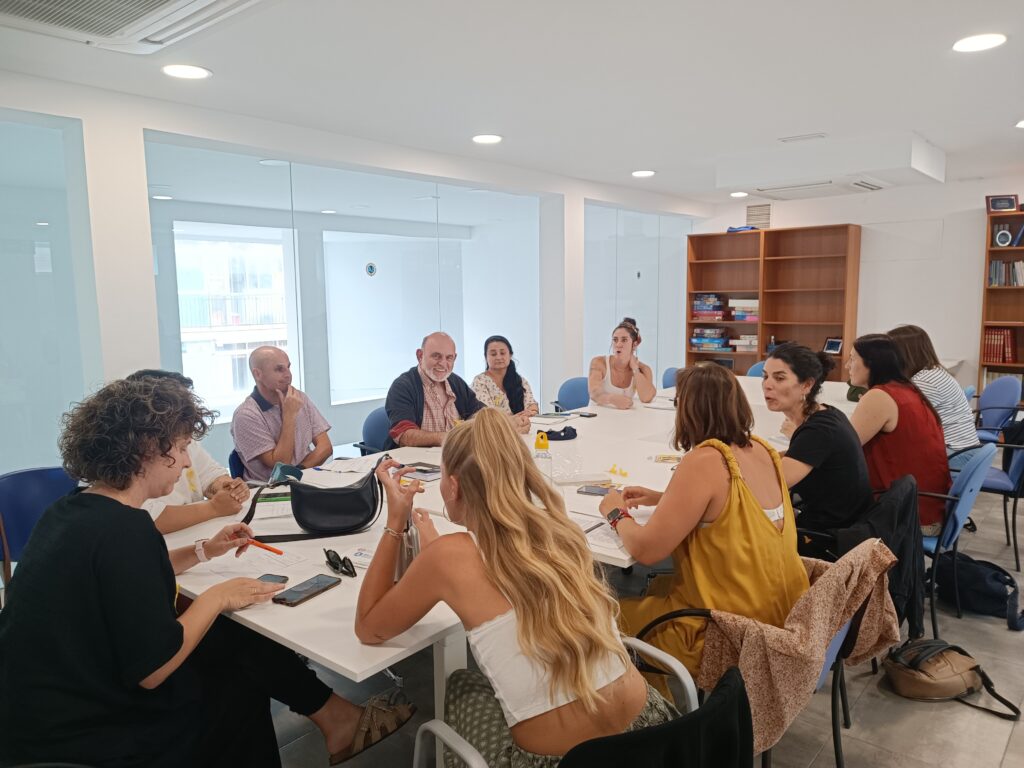
Between September and December 2025, Solidaridad Sin Fronteras implemented a civic incubation process supporting six informal groups in Madrid, Alcorcón and Leganés.
Despite coming from different backgrounds and working on diverse themes, all groups shared a common goal: to strengthen participation, inclusion and coexistence at local level.
From recruitment to tailored support
The six groups brought together community members interested in:
- employment inclusion and empowerment, particularly for women
- gender equality and creative expression
- disability awareness and rights
- countering rumours and stereotypes
- intercultural neighbourhood coexistence
- community-building through shared food and cultural exchange
Although the groups were larger in size, a smaller core from each committed to the full incubation journey, ensuring continuity and meaningful engagement throughout the process.
Diagnosis and incubation journey
An initial diagnosis phase helped identify each group’s priorities, such as:
- improving internal organisation and role distribution
- increasing visibility and confidence
- strengthening participation and mobilisation
- clarifying mission and purpose
Based on these needs, the incubation combined group workshops, personalised mentoring and continuous support. The process helped groups clarify what they wanted to change in their communities and how to act together in a realistic and participatory way.
Civic initiatives brought to life
All six groups designed and implemented their own civic initiatives between November and December 2025. These included:
- a community dialogue on employment barriers and available support resources
- an artistic activity promoting gender equality and emotional expression
- a participatory disability-awareness session using interactive methods
- a joint neighbourhood initiative addressing coexistence and anti-rumours
- an intercultural gastronomy event using food as a tool for dialogue
Across the initiatives, community members came together to share experiences, challenge stereotypes, and build trust in safe and inclusive spaces.
What changed for the groups
Through the incubation process, groups reported:
- stronger cohesion and mutual trust
- improved planning and communication skills
- increased confidence to engage with the wider community and institutions
- greater awareness of participation, dignity, equality and solidarity
Many participants highlighted that this was their first experience of structured civic action—and that the mentoring helped them move from intention to concrete action.
Looking ahead
All groups expressed their intention to continue their activities beyond the programme, building on the skills, confidence and connections developed during the incubation.
This experience confirmed that informal groups, when supported with flexible mentoring and practical tools, can play a powerful role in strengthening local democracy and social cohesion.